
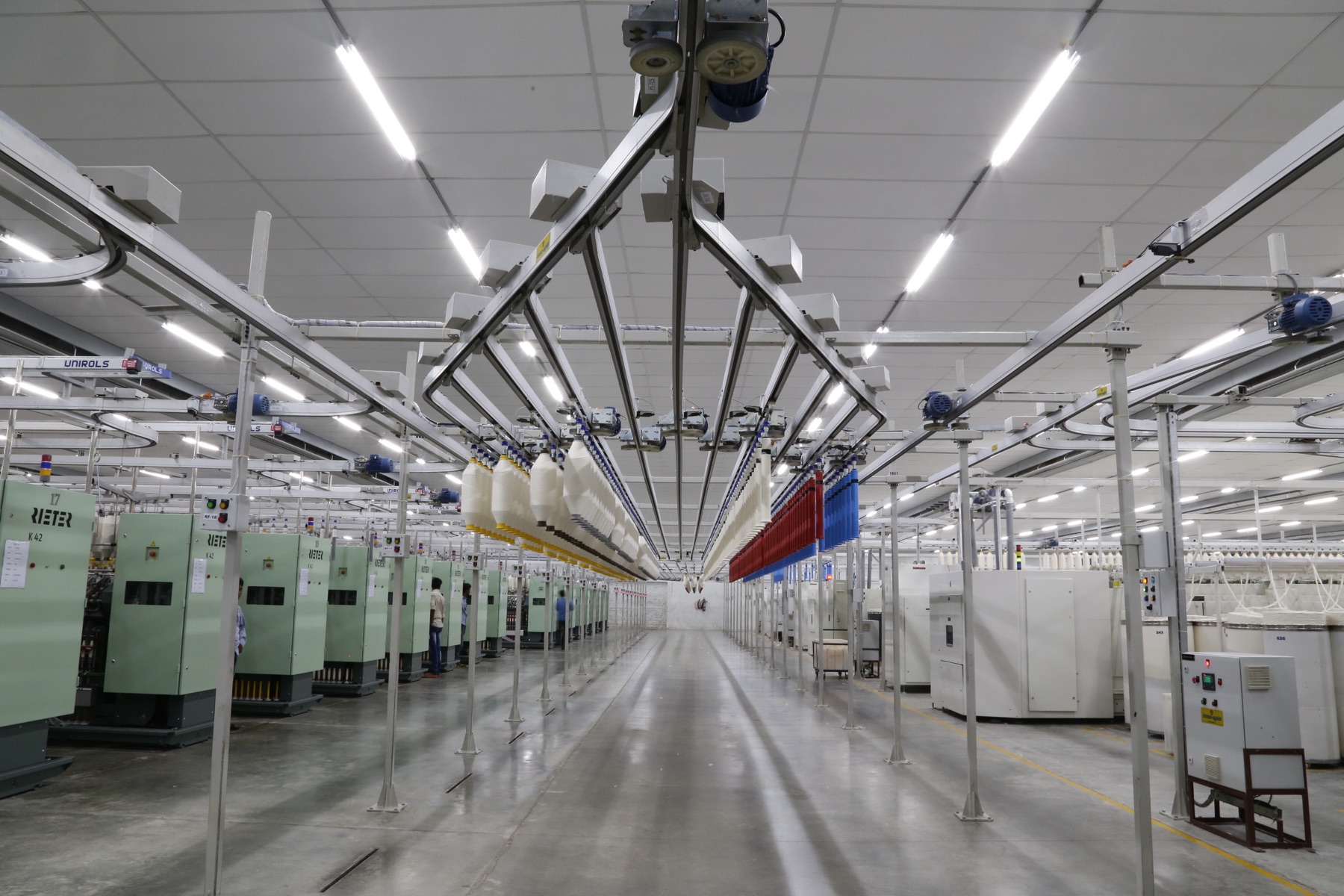
Bobbin transport is not an accessory item
On most quotations the roving transport system sits as one line among many. But of all the automation on a spinning floor, it is the one piece that sits inside the material path. That changes how it should be bought.
What actually decides whether a roving transport system keeps up
A system can have the right number of trains and still fail to deliver on time. Efficiency here is a traffic problem, not a motor problem. These are the factors that decide it, and how we work around them.
Parking, and why it decides whether you can change a lot
Parking looks like a storage question. It is really a production flexibility question. Here are the three arrangements, what each one lets you do, and the single point that decides whether you can change a ring frame lot cleanly.
Auto-doffing speed frames: does fixed-flow still work?
If your speed frames doff automatically, the transport system has to return a full set of empty bobbins inside the doff window, every single time. Here is the arithmetic, and what to watch for if you still want the simpler system.
Track changers: the small part that decides whether the system runs unattended
A track changer moves a short section of rail so a train can take a different route. When it does not complete that movement, a loaded train meets a half-set point. Here is how we drive ours, and why it matters more than the specification sheet suggests.
Why we use aluminium track and not mild steel
Mild steel costs less per kilo, which is why it turns up in lower quotations. But the track is a running surface carrying a moving load inside a warm, humid, dusty building. Here is what the material choice actually changes.
Open profile or closed profile track: how to pick the right one for your mill
We make open profile and closed profile track, and which one is right for your mill depends on what you spin and how you run the floor. Here is how the two differ and how we help you choose.