
Parking, and why it decides whether you can change a lot
Parking looks like a storage question. It is really a production flexibility question. Here are the three arrangements, what each one lets you do, and the single point that decides whether you can change a ring frame lot cleanly.
What parking is for
Parking is where a train waits when it is not needed yet.
That sounds like a minor detail. It is not. Without somewhere to wait, a train either stays on the running track, where it is in the way, or it does not exist, in which case the material it would have carried is not ready when a frame asks for it. Parking is what lets material be ready early instead of only just in time.
The three arrangements
Serpentine parking above the speed frame
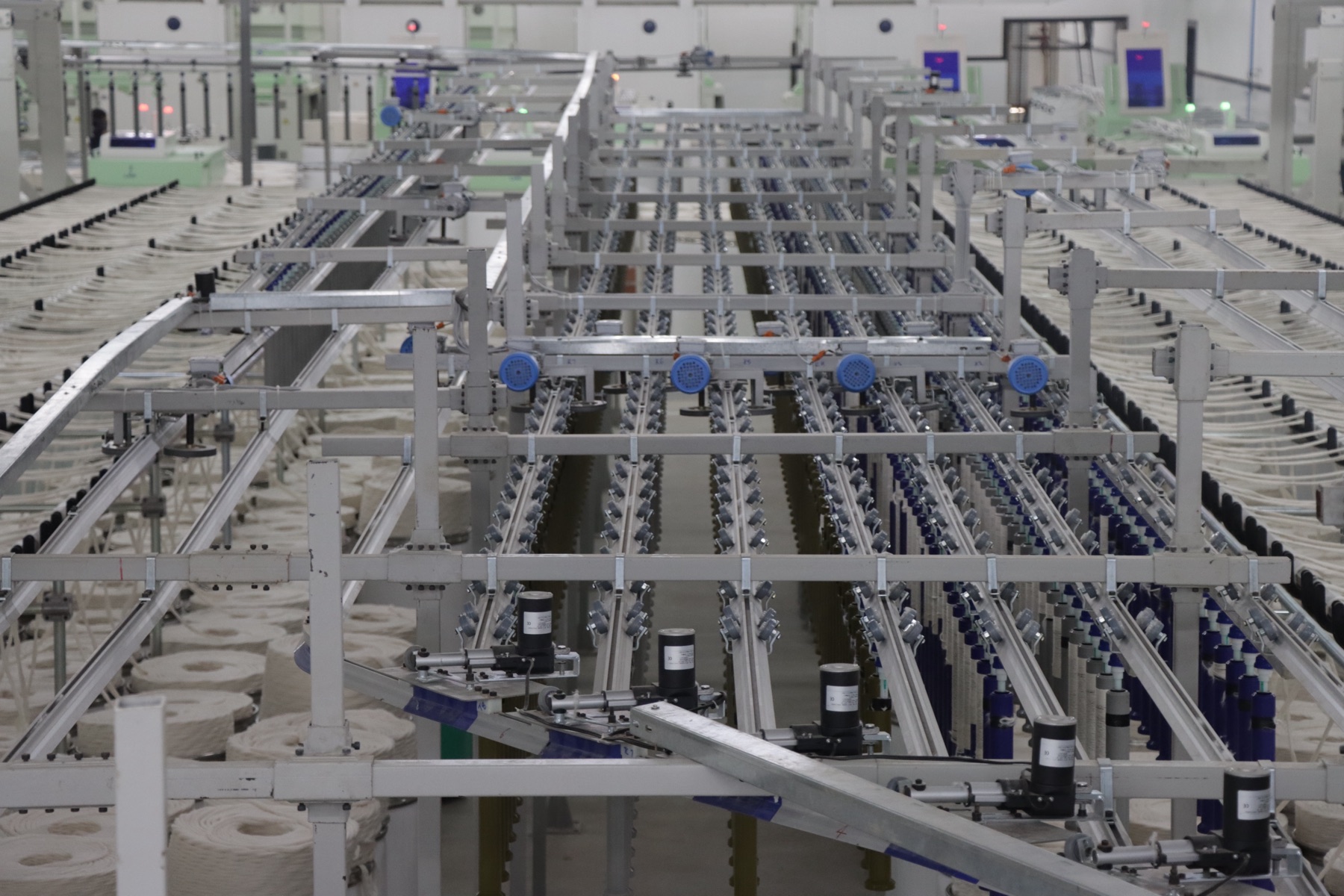
Rail is run back and forth in the space above the speed frame itself, so trains wait directly over the machine they came from.
The attraction is floor space. You are using height above a machine that is already standing on that floor, so you give up nothing on the ground. In a tight building this can be the difference between a system that fits and one that does not. It is also generally the cheaper arrangement.
The limit is capacity. There is only so much rail you can fit above one frame, so it holds a small number of trains.
Separate buffer parking
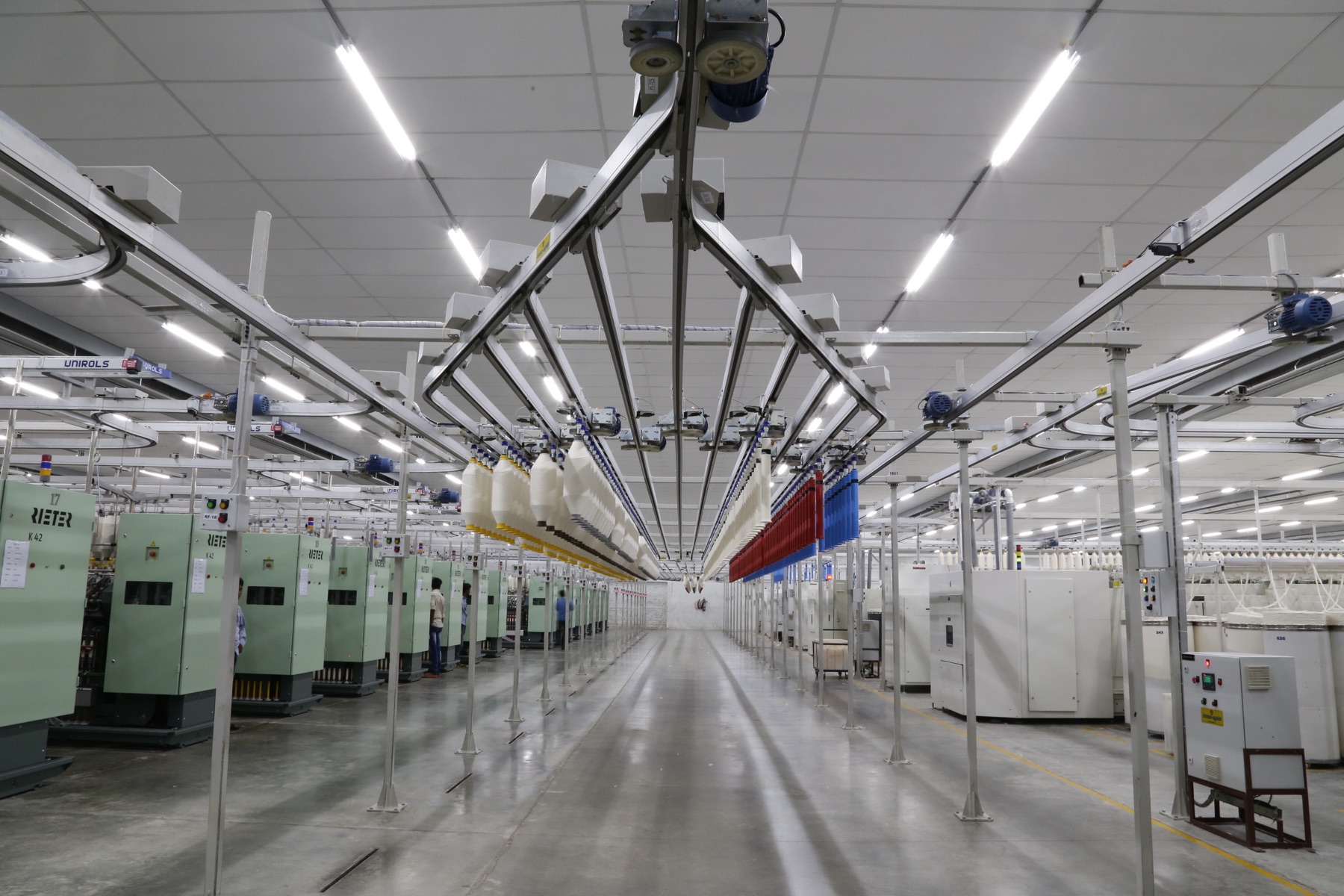
A dedicated area, usually to one side of the production floor, with several parallel tracks holding trains.
This costs floor area, and that is a real cost. What you get for it is capacity and freedom. You can hold enough material to stage a complete operation before you begin it, keep different counts cleanly separated, and reach the rail for maintenance without working over a running machine.
Where the layout allows it, this is what we recommend.
Hybrid, meaning both
A short serpentine run above each speed frame to keep that frame fed, and a separate bay for the larger staging work.
Most floors we design end up here, because the two arrangements are solving different problems.
The lot change, which is where this gets decided
Here is the part that settles which arrangement you need.
To change the count on a ring frame you need a full frame's worth of roving of the new count ready before you start. Not most of it. All of it. If you begin the change and run out halfway, you have a stopped frame with a half-changed creel, which is worse than not having started.
Take a ring frame whose creel holds around 2,400 roving bobbins, and a train that carries 240. That is ten trains of the new count standing ready before the changeover begins.
Some of those can wait at the ring frame itself, and a few can wait above the speed frame. The rest have to be somewhere, and that somewhere is parking.
Serpentine parking above a speed frame holds a few trains. It is sized to keep that frame fed and it does that job well. It is not sized to hold a full ring frame's worth of one count. If your production plan involves changing lots on ring frames, over-frame parking on its own will not support it.
This is the most common misunderstanding we end up correcting. Two quotations show a similar train count, the parking looks like a detail, and then the first planned count change turns into a stopped frame.
Dedicated bays against dynamic bays
The second thing that decides how much parking you actually need is whether a bay can be used by any train or only by some.
In most systems, parking positions are tied to a particular machine. This bay serves speed frame 3. That one holds empties for ring frame 7. It is simple to build and simple to control.
It is also wasteful, and the waste stays invisible until the floor is busy.
When bays belong to machines, a free bay is frequently the wrong free bay. A train needs somewhere to wait, three bays are standing empty, and none of them will take it because they belong to other machines. You paid for parking that you cannot use at the moment you need it.
Our separate buffer parking is dynamic. Any train can go into any free bay: full or empty, from any speed frame, headed for any ring frame. There is no ownership. Free means usable.
As far as we are aware we are the only supplier in this market doing that. The practical effect is that a dynamic bay does the work of more than one dedicated bay. In our engineering experience, matching the performance of our parking using fixed bays takes roughly two to three times as many of them. That is less rail, less structure, less floor area and less money for the same flow or better. The parking count itself falls out of the same sum we use for the whole fleet, which we walk through in how many trains a mill needs.
How to decide
You should not try to settle this from a brochure, and you do not have to. What we need is your floor plan with columns and clear heights, your machine list, and an honest description of how often you change counts and re-map frames.
We supply all three arrangements. Which one we propose depends on what your building allows and what your production plan demands. If your layout suits serpentine parking and your production does not need lot staging, we will say so, and the system will cost you less.
Run the inno-spin RTS Configuration Portal
Our free portal takes your Speed Frame and Ring Frame parameters and gives you a Fixed-flow vs. Flexi-flow recommendation backed by your own production data.
Configure my RTS →